Rise from depression Reviews

Rise from depression Reviews: Bad advice spreads because it’s easy. That’s it. It is easy to say, easy to share, easy to dress up with fake confidence. Somebody throws “just be positive” into a comment thread, somebody else pastes it onto a sunrise image, and suddenly a lazy sentence gets treated like wisdom. In the USA, this stuff travels fast because it fits perfectly into short videos, Facebook posts, family lectures, and those weirdly confident wellness threads where everybody sounds like a part-time monk and a full-time salesperson. The official Rise From Depression pages, by comparison, describe a self-guided depression course on Nathan Peterson’s OCD & Anxiety platform with evidence-based strategies, a free preview, and structured materials.
That difference matters more than people think. When bad advice fails, people usually don’t blame the advice first. They blame themselves. They think maybe they are lazy, weak, or somehow uniquely broken. That is the ugly part. So if you are searching Rise from depression Reviews in the USA, you probably do not want glittery hype. You want to know whether this thing looks real, whether the reviews are overcooked, and whether the product sounds more grounded than the usual internet circus. Fair. Very fair.
Based on the official pages, Rise From Depression appears to be a real course inside a broader mental health education ecosystem. The main platform lists it as a depression course that is self-guided and focused on evidence-based strategies, while the preview page says there are sample modules, worksheets, and mood journals available with no credit card needed. Nathan Peterson’s counseling site also describes the course as “multiple therapy sessions worth of information,” with 13 engaging self-paced videos and worksheets.
Now let’s get to the nonsense.
| Feature | Details |
|---|---|
| Product Name | Rise From Depression |
| Type | Self-guided online depression course |
| Creator | Nathan Peterson |
| Core Angle | Evidence-based strategies for depression |
| Format | 13 self-paced videos + worksheets |
| Preview Option | Free preview available |
| Platform | OCD & Anxiety Online |
| Main Claims in Reviews | “Highly recommended”, “Reliable”, “No scam”, “100% legit” |
| USA Relevance | Useful for USA buyers wanting flexible, home-based support tools |
| Risk Factor | Unrealistic expectations, self-guided effort, not a replacement for crisis care |
| Authenticity Tip | Use the official course platform, not random third-party pages |
1. “Just think positive and everything changes”
Ah yes. The classic. The grand masterpiece of unhelpful advice.
This one survives because it sounds neat. It fits on a mug. It makes the person saying it feel wise without forcing them to understand anything. But depression is not a bad haircut you fix with better lighting. It is not just a stack of sad thoughts waiting to be replaced by cheerful ones. The official course itself is not marketed like that either. It is framed around evidence-based treatment strategies and guided learning, not generic positivity slogans.
A lot of people already know their thoughts are harsh, repetitive, distorted, or punishing. They know. Awareness is not the full solution. Knowing your tire is flat does not put air in it. Knowing your sink leaks does not fix the pipe. “Just think positive” treats depression like a simple attitude issue instead of something that often needs structure, repetition, and tools that can be used when a person feels awful.
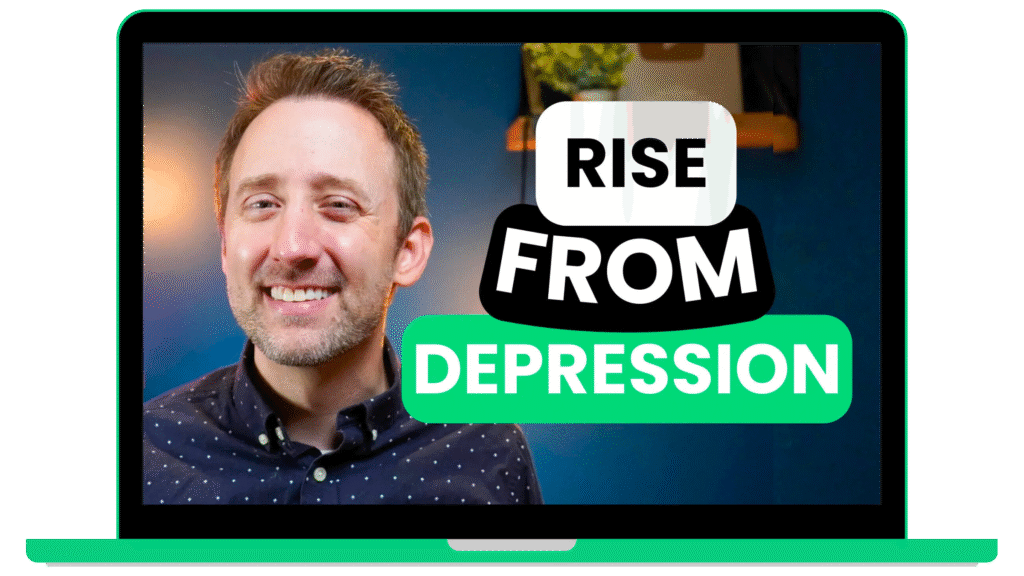
What actually makes more sense is a system. Lessons. Worksheets. Mood tracking. Practice. The public pages for Rise From Depression point to exactly that kind of structured setup, which is one reason Rise from depression Reviews gets so much search interest from USA readers who are tired of bumper-sticker advice.
2. “Wait until motivation comes back, then begin”
This one sounds gentle, and that is exactly how it traps people.
“Start when you feel ready.”
“Don’t push it.”
“Wait for the spark.”
Nice words. Soft words. Terrible loop.
Because depression often drains motivation first. So waiting for motivation before doing anything can become a perfect little prison. No motivation, so no action. No action, so nothing changes. Nothing changes, so motivation still does not return. Around and around. It is the emotional equivalent of waiting for a dead car battery to recharge itself because you looked at it kindly.
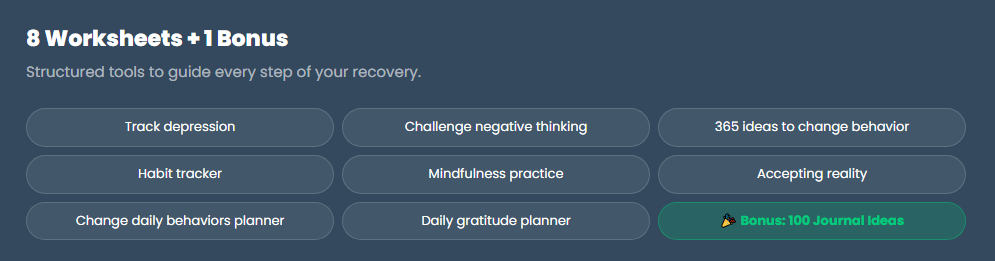
The official materials for Rise From Depression do not frame the course as passive comfort-content. They frame it as a self-guided course with videos, worksheets, mood journals, and evidence-based strategies. That implies doing something, even in small steps, not waiting around for the sky to open and deliver inspiration.
A good Rise from depression Reviews article should say this out loud: buying a tool is not the same thing as using a tool. That sentence is a little rude, but it is also true. What usually makes more sense is tiny action before full emotional readiness. One lesson. One worksheet. One journal entry. One pattern noticed. The preview page’s free sample modules and worksheets fit that “start small” logic much better than the fantasy of waiting until motivation floats back into the room.
3. “If you need help, therapy, or a course, you’re weak”
This advice is trash wearing a blazer.
There is still a weird cultural script in parts of the USA that treats silent suffering like strength. Don’t ask for help. Don’t use structure. Don’t need support. Just look serious and hold everything inside until your inner life feels like a dusty attic. It is fake toughness, really.
What makes the Rise From Depression setup look more grounded is that it sits inside a broader platform with courses, tests, blogs, YouTube education, and other support tools. Nathan Peterson’s counseling site also notes that he is not taking new patients and that his counseling sessions are Texas or Utah only, while also directing people toward online courses for help sooner at home. That is a normal, realistic setup, not miracle-product theater.
That does not make the course perfect for everyone. It does make it look more like a real clinician-led education resource than a random digital product shouting “change your life now.” Real products usually have limits. Fake miracle junk tends to promise everything.
What actually makes more sense is using the level of support that fits where you are. For some people that means therapy. For others it may mean a self-guided course as a starting point, especially when cost, location, waiting times, or privacy are a factor. The official pages consistently present Rise From Depression as a self-guided course, not as a replacement for every kind of care.
4. “Go outside, drink water, meditate, done”
Let me be fair first.
Yes, walking can help.
Yes, hydration matters.
Yes, mindfulness can help some people.
Yes, sleep matters.
Now the blunt part.
When people throw those things around as if they are the entire answer, the advice becomes cartoonishly thin. A water bottle and a walk are not a complete depression plan. They are not the whole kitchen. They are one spoon and maybe a napkin.
The official course pages suggest something broader. Rise From Depression is described as self-guided, evidence-based, and built around lessons, worksheets, and mood journals. The counseling site adds that it includes 13 engaging self-paced videos and worksheets to guide treatment. That is much more substantial than random wellness chatter disguised as revelation.
This is where a lot of Rise from depression Reviews pages go sideways. Some oversell the course like it’s a miracle machine. Others dismiss it as if it were nothing more than prettier “touch grass” advice. From the official materials, it looks like neither. It looks like a structured self-guided course with more layers than the average internet wellness slogan.
5. “Anything online is either a miracle or a scam”
The internet has lost the ability to have normal-sized opinions.
Everything has to be life-changing or fraudulent. Especially in USA review culture, where one page sounds like a wedding toast to a product and the next sounds like a federal indictment.
A smarter question is much duller, which is why it is more useful: what does the official offer actually show? In this case, the course is clearly listed on Nathan Peterson’s OCD & Anxiety site. There is a free preview page. The same site positions it as part of a broader set of courses and support tools. The counseling page also references the course directly and describes what’s inside.
That does not prove every USA buyer will love it. Nothing honest could prove that. But it does make the product look like a real course on a real platform, which already separates it from plenty of sketchy digital junk floating around online.
What actually works better is boring adult judgment. Read the official pages. Look at the structure. Notice the preview. Ignore adjectives trying too hard. If a Rise from depression Reviews article sounds like somebody is proposing marriage to a checkout button, maybe do not treat it as gospel.
So what are the real complaints likely to be?
Usually, effort.
That is the part nobody likes.
A self-guided course still requires the self to do guided things. Watch the videos. Open the worksheets. Use the mood journals. Repeat the ideas. The public descriptions make that clear by emphasizing self-guided learning, videos, worksheets, and evidence-based treatment strategies.
Another real complaint is fit. Some people need more support than a course can provide. Some dislike self-paced material. Some expect something dramatic and get annoyed when the product behaves like a course instead of a magical portal. Those are legitimate fit issues. They are not automatically proof of a scam.
That is where so many Rise from depression Reviews pages become useless. They turn product-fit issues into melodrama, or decent experiences into worship. The middle truth is less exciting and much more useful: a course can be real, structured, and potentially helpful without being perfect for everyone in the USA.
My blunt take for USA readers
If you are in the USA and searching Rise from depression Reviews, here is the clean version.
Based on the official pages, Rise From Depression appears to be a real self-guided course on Nathan Peterson’s mental health platform, with evidence-based positioning, preview access, and public references to videos and worksheets.
That is the solid part.
The less glamorous part is that it still looks like a course. Which means it probably works best for people willing to engage with it, repeat the tools, and tolerate some boring middle steps. It is not emergency care. It is not one-on-one therapy. It is not a glowing miracle wrapped in affiliate adjectives.
So when you see giant lines like “I love this product,” “highly recommended,” “reliable,” “no scam,” and “100% legit,” do not let those phrases do all the thinking for you. Some may be sincere. Some are clearly sales language trying much too hard. The official offer matters more than the confetti around it.
And the official offer looks coherent. Structured. Real. That counts.
Filter out the nonsense.
Ignore the fake tough-love crowd. Ignore the wellness parrots. Ignore the people who reduce depression to attitude, hydration, hustle, or a sunrise over Arizona. Ignore the review writers who sound like they want to either marry the product or sue it.
Most bad advice spreads because it is simple, not because it is true.
The better stuff is usually slower. More structured. More repetitive. Maybe a little boring. Fine. Boring is underrated. Boring can still save you from wasting time, money, and hope on glitter-coated rubbish.
So if you came here looking for a Rise from depression Reviews article, the plain takeaway is this: the official course looks like a legitimate self-guided product with real structure, preview access, and a more believable setup than a lot of noisy internet fluff.
That does not make it magic. It just makes it worth judging like a real thing.
5 FAQs
1. Is Rise From Depression a real product?
Based on the official site, yes. It is listed on Nathan Peterson’s OCD & Anxiety platform as a self-guided depression course, and there is also a free preview page plus a separate counseling-site reference to the course.
2. What is included in the course?
The public pages describe sample video lessons, depression worksheets, mood journals, and a broader course experience. The counseling site specifically mentions 13 engaging self-paced videos and worksheets.
3. Is there a preview before paying?
Yes. The official preview page says users can get sample modules, worksheets, and mood journals with no credit card needed.
4. Who is this course likely best for in the USA?
Based on how it is described, it appears best suited to USA buyers who want flexible, private, home-based, self-guided support tools and are willing to engage with lessons and worksheets. That is an inference from the official course framing.
5. Why do so many Rise from depression Reviews sound overhyped?
Because many review pages are built to sell clicks or commissions, so they lean hard on phrases like “highly recommended,” “reliable,” and “100% legit.” The official pages themselves are much more specific and grounded than that kind of hype language.