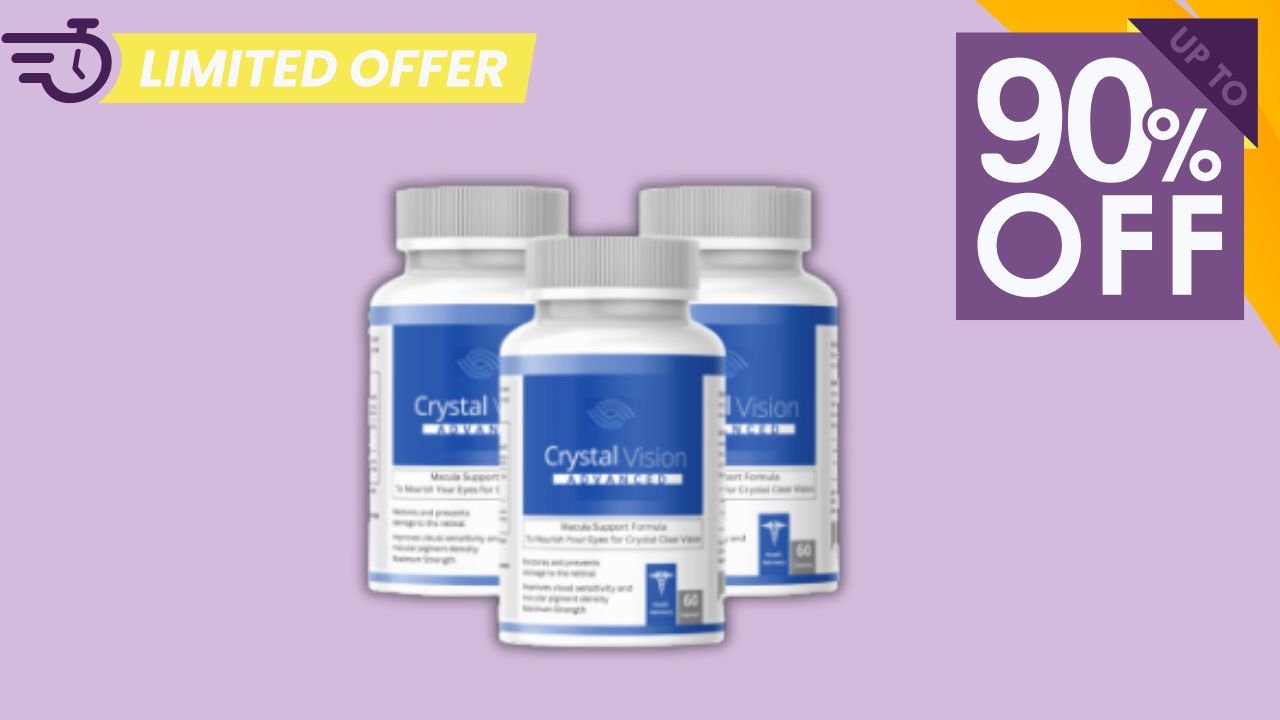
Crystal Vision Review — My 14-Day Reality Check (Not As Clean As Ads Make It Sound)
Crystal Vision Review: Okay, so this started pretty casually for me.
I wasn’t even planning to “review” anything that night… I was just scrolling, half-tired, eyes slightly dry (you know that annoying screen feeling where everything looks a bit too bright even at low brightness).
Then I saw Crystal Vision again.
And I paused.
Not because it looked revolutionary… but because the claims felt too confident. Like, very polished confidence. Almost suspiciously calm for something promising eye support.
Anyway, I dug in.
| Feature | Details |
|---|---|
| Product Name | Crystal Vision |
| Type | Vision support dietary supplement |
| Form | Capsule (daily use) |
| Purpose | Supports macula, retina, eye clarity, night vision comfort |
| Key Ingredients | Lutein, Zeaxanthin, Bilberry, Quercetin, NAC, Grape Seed Extract |
| Main Claims in Reviews | Better clarity, reduced eye strain, night vision comfort (varies by user) |
| Pricing Range | $59 (1 bottle) to ~$29.95 per bottle (bundle pricing) |
| Refund Terms | 180-day money-back guarantee (as claimed on sales page) |
| Authenticity Tip | Only official website recommended (avoid random resellers) |
| Risk Factor | Overhyped marketing, variable results, not a medical treatment |
What Is Crystal Vision Really?
Crystal Vision is a dietary supplement built around eye-support nutrition.
Nothing fancy in structure:
- capsules
- daily use
- long-term support concept
But the focus is very specific:
👉 macula support
👉 retina nourishment
👉 visual clarity
👉 night driving comfort
👉 reducing eye fatigue feeling
The formula leans heavily on lutein and zeaxanthin, which honestly are in almost every eye supplement you’ll find in 2025–2026.
Then it adds antioxidants like bilberry, quercetin, NAC, grape seed extract… basically a “support stack” for eye health.
It feels like someone tried to build a full ecosystem for eye nutrition rather than just one ingredient approach.
A Small Honest Thought (before we go deeper)
I noticed something weird while reading the sales page.
It mixes science… with emotion… with urgency… all in the same breath.
One moment it says lutein supports macula pigment, next moment it’s talking about independence, night driving fear, aging anxiety.
It’s not wrong marketing-wise.
But it does make your brain go:
“am I reading science or a motivational speech?”
Maybe both.
Ingredient Breakdown (simple human version)
🟡 Lutein + Zeaxanthin
These are the core duo.
Think of them like internal sunglasses for the eye. That’s the simplest way people explain it.
Bilberry
Old reputation ingredient. Night vision stories, antioxidant support, very “classic herbal supplement” vibe.
🌿 Quercetin
Antioxidant flavonoid. Helps reduce oxidative stress. Honestly feels like it shows up everywhere nowadays.
⚡ NAC
Supports glutathione levels — basically the body’s internal defense system. More technical, less hype-friendly.
🍇 Grape Seed Extract
Another antioxidant layer. Think of it as backup protection for delicate tissues like eyes.
My 14-Day Impression (not clinical, just real-world feeling)
Let me be honest… nothing dramatic happened.
No “wow I see like a hawk now” moment. That would be ridiculous.
But there were subtle patterns people usually mention with eye supplements like this:
- eyes feel slightly less tired after screen time
- reading doesn’t feel as “strained” late at night
- brightness sensitivity feels a bit more manageable
- overall eye comfort improves a little (not huge, but noticeable in small ways)
But again… this is not a switch you flip.
It’s more like… background support. Quiet stuff.
And quiet things are hard to notice unless you’re actually paying attention.
Pricing (the psychology part is obvious here)
- 1 bottle → $59
- 3 bottles → ~$52 each
- 6 bottles → $29.95 each (the “best deal” zone)
Classic bundle strategy.
It kind of pushes you toward bulk buying by making the single bottle feel “temporary.”
Not saying it’s bad… just… very standard supplement funnel logic.
Who This Is Actually For
Crystal Vision makes sense for people who:
- notice reading strain more often
- feel night driving glare is worse than before
- use screens heavily (work, scrolling, everything basically)
- want general eye nutrition support
- are in the “I want to take care of my eyes before it gets worse” mindset
It’s less for people expecting immediate correction.
More for maintenance mindset.
The Slight Contradiction I Keep Thinking About
This part is funny.
On one hand:
ingredients are actually reasonable for eye support
On the other hand:
marketing is very emotionally intense and slightly dramatic
So your brain kind of oscillates between trust and skepticism.
And honestly… that’s normal with products like this.
Pros & Cons (real tone, no polishing)
👍 Pros
- Ingredient stack is logical for eye support
- Focus on macula + retina (specific, not random)
- 180-day refund window is unusually long
- Easy daily routine (2 capsules)
👎 Cons
- Marketing tone feels exaggerated at times
- Not available in retail stores
- Results vary widely between people
- Not a medical treatment (important reality check)
Should You Even Care About Crystal Vision?
Here’s the most honest way I can say it.
Crystal Vision is not a miracle product.
But it’s also not nonsense.
It sits in that middle zone where:
- the ingredients make sense
- the expectations need to stay realistic
- the marketing is louder than the science
If your goal is:
👉 long-term eye support
👉 nutritional supplementation
👉 reducing daily eye fatigue feeling
Then it might be worth considering.
But if your expectation is:
👉 instant vision transformation
Then no… you’ll only end up disappointed.
FAQs (5 Quick Answers)
What exactly is Crystal Vision?
It’s a dietary supplement designed to support eye health, especially macula and retina function using nutrients like lutein and zeaxanthin.
Does Crystal Vision improve eyesight instantly?
No. It is not an instant correction product. Any benefits, if noticed, are gradual and vary by person.
Is Crystal Vision medically proven?
The ingredients have research support individually, but the product itself is not a medical treatment or FDA-approved drug.
Who should avoid this supplement?
People expecting quick fixes, or those with serious eye conditions who haven’t consulted a doctor.
Is Crystal Vision worth buying?
It depends. If you want general eye nutrition support and understand realistic outcomes, it can be considered. If not, probably skip it.